
Why Systematic AC Diagnostics are Critical
Modern air conditioning systems—particularly contemporary inverter units—are sophisticated thermodynamic machines controlled by microprocessors, multiple temperature sensors (thermistors), electronic expansion valves (EEVs), and variable-speed DC compressors.
When a system malfunctions, the visible symptom (such as weak cooling or a flashing fault code) can often be triggered by several distinct failures. For example, a compressor tripping on thermal overload may be caused by a failed run capacitor, a seized bearing, high refrigerant head pressure, or an electronic inverter IPM board fault.
At AC Repair Adelaide, we never guess. Replacing random components until a system runs is expensive, frustrating, and unprofessional. Our qualified technicians follow a methodical diagnostic procedure to isolate the root failure.
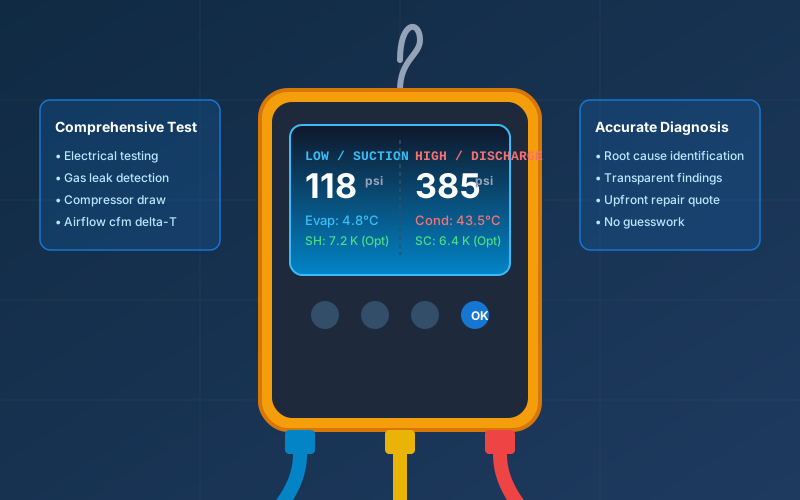
Key Diagnostic Procedures We Carry Out
1. Electrical Circuit & Component Testing
- Capacitor Microfarad (µF) Testing: We test start and run capacitors with calibrated multi-meters against manufacturer tolerances (typically ±5%). A capacitor degraded by 10% can cause compressor lockouts.
- Megger Insulation Resistance Testing: Testing compressor windings to ground to detect electrical shorts or degraded insulation before energising power.
- Contactor & Relay Inspection: Checking for pitted or carbonised contact points that cause intermittent voltage drops.
- DC Voltage & Signal Checks: Verifying data communication signals between indoor and outdoor PCBs.
2. Thermodynamic & Refrigerant Circuit Analysis
- Digital Manifold Pressure Readings: Measuring saturated suction and discharge pressures to verify refrigerant stability.
- Superheat & Subcooling Calculations: Calculating evaporator superheat and condenser subcooling to accurately diagnose whether a system is undercharged (leak), overcharged, or suffering from a metering valve restriction.
- Electronic Refrigerant Sniffer Leak Detection: Using high-sensitivity electronic gas detectors to pinpoint micro-leaks at service valves, flare nuts, or evaporator bends.
3. Airflow & Static Pressure Measurements
- Delta-T (ΔT) Temperature Split: Measuring the exact temperature difference between the return air intake and the supply air grille (healthy systems typically achieve a 10°C–14°C drop).
- Ductwork Static Pressure: Testing external static pressure to identify crushed flex ducts, undersized return grilles, or zone damper restrictions.
Transparent Findings Before You Commit
Following our diagnostic inspection, our technician explains the exact fault, shows you the readings or damaged components where applicable, and presents a written quote for repair. You have complete transparency and control before authorising any work.
Frequently Asked Questions — Fault Diagnosis
The diagnostic fee covers the technician's travel to your Adelaide property, electrical safety testing, mechanical inspection, digital pressure measurements, and a formal explanation of the fault with an itemised repair quotation.
While we can offer helpful troubleshooting guidance (such as checking remote batteries or circuit breakers), an accurate diagnosis requires testing live electrical voltages, compressor resistance, and refrigerant pressures on-site with specialised diagnostic equipment.